

FISH is a microscopic molecular-cytogenetic method that allows targeted examination of predetermined chromosomal regions/genes. In our laboratory, FISH examination is a supplementary test that specifies and/or confirms an individual's karyotype.
Principle of the FISH Method: The examined metaphases and/or cell nuclei are fixed on a microscope slide. The principle of the method involves labeling several specific chromosomal regions with a fluorescently labeled probe complementary to the given DNA segment. Evaluation is performed using fluorescence microscopy. The method can only determine changes in selected chromosomes or their parts, marked by the chosen fluorescent probe.
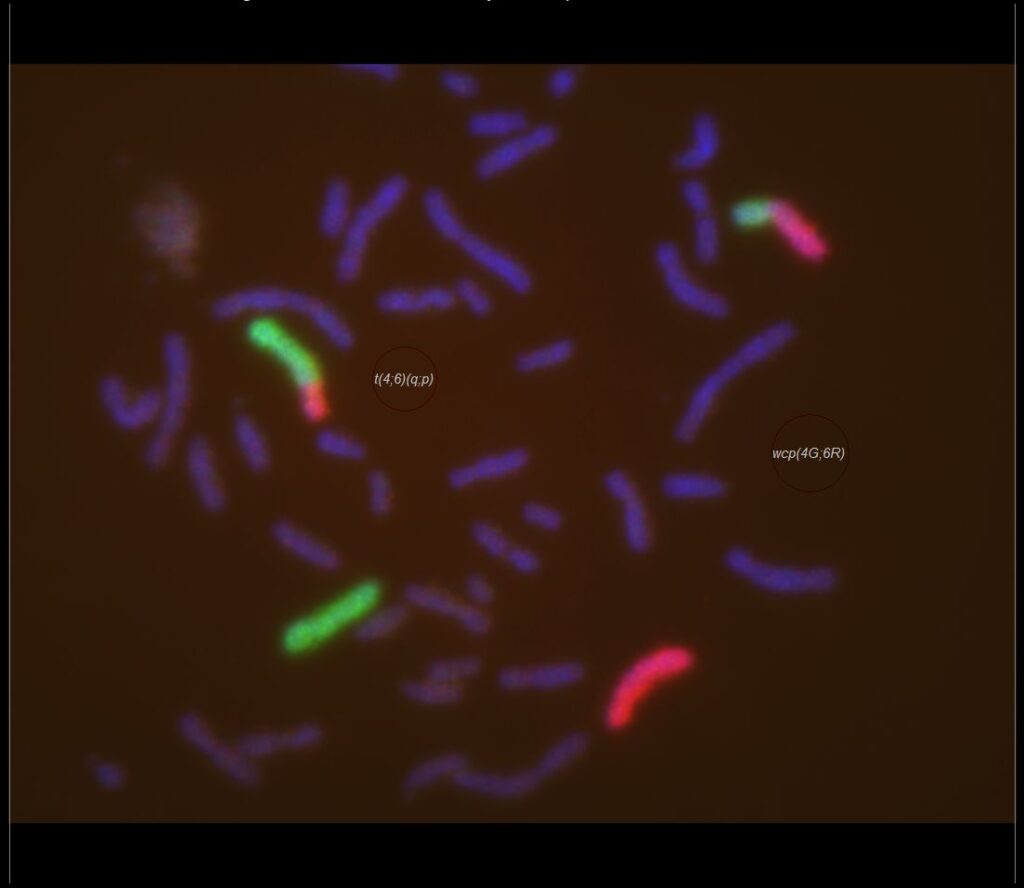
Example of confirming reciprocal translocation with painting probes:
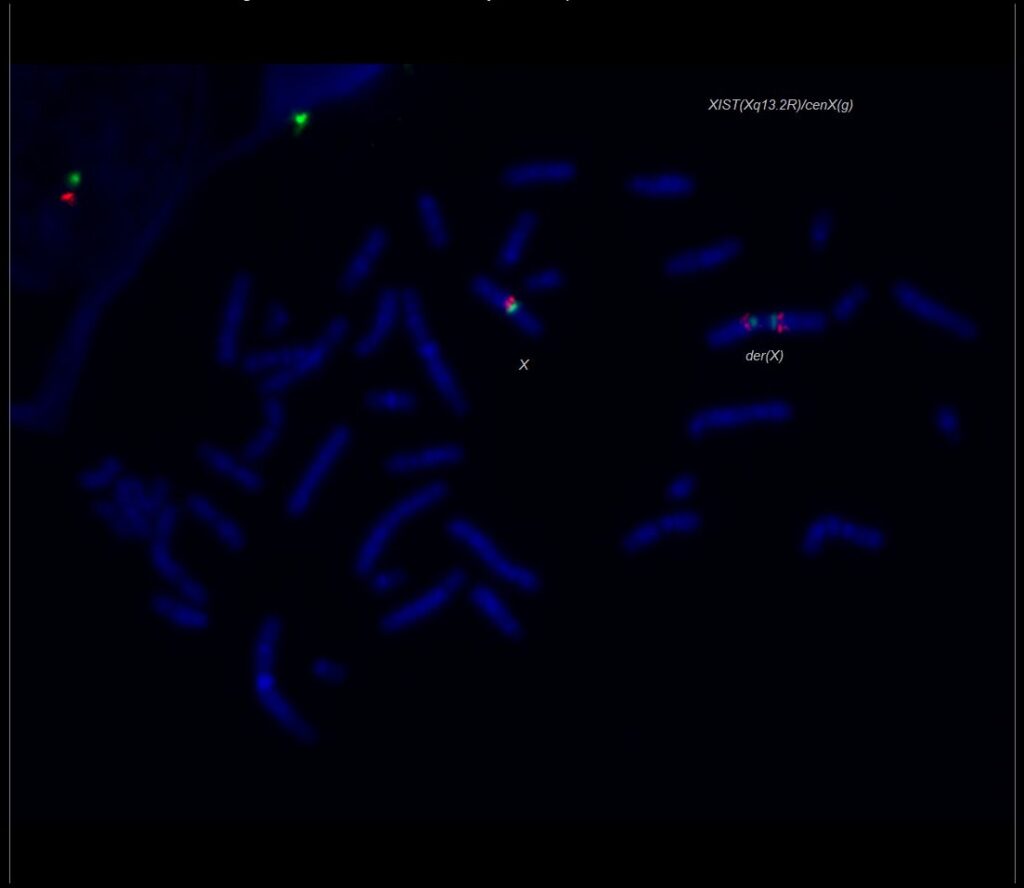
Example of elucidating a structural aberration with locus-specific probes – isodicentric chromosome
 English
  Czech
Czech  German