

Karyomapping is a robust modern molecular-genetic chip examination of variants in the DNA sequence. The uniqueness of the set of these variants in each individual forms the basis of so-called "indirect" genetic diagnostics, which is fundamental for PGT-M testing. It is a whole-genome examination, and in addition to testing any monogenic disease, it also allows a preliminary screening examination of quantitative changes in all chromosomes (PGT-A).
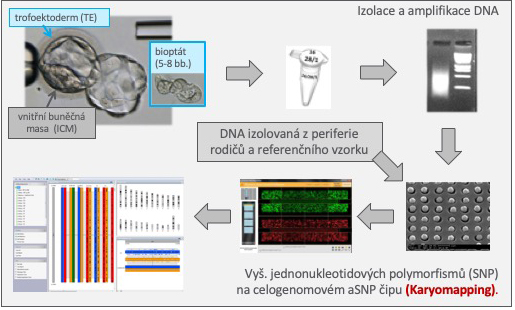
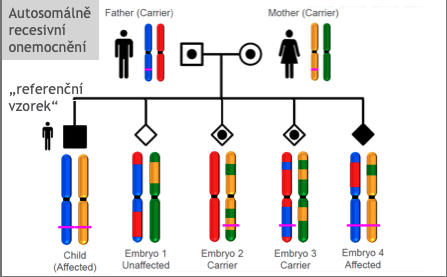
Principle of the Karyomapping Method: The method is based on comparing the DNA of embryonic samples with the DNA of the couple and a reference family member, collected during the SET-UP. DNA is extracted from the collected samples, and a special whole genome amplification (WGA of the MDA type) is additionally performed on embryonic samples. The examination itself is performed on a special type of microchip (SNParray), which can simultaneously detect a large number of selected single nucleotide polymorphisms (SNPs) of the entire genome. The specific combination of SNPs in the gene region causing the given monogenic disease distinguishes individual individuals (family members, embryos) and both their alleles of this gene (haplotypes). By comparing the identified haplotypes with pedigree information of the examined family, haplotypes associated with the presence of the mutation (i.e., carrying the risk for the disease) are determined. In some cases, which occur very rarely, it is necessary to use Karyomapping in combination with direct mutation detection. The method is universal and allows the examination of any known monogenic disease. Another advantage is the significant reduction in complexity and shortening of the preparatory phase of the examination (SET-UP).
Limitations of the Karyomapping Method: PGD for familial monogenic diseases (PGT-M) cannot exclude any other diseases or developmental defects of the fetus that are not caused by a mutation in the given gene. Karyomapping cannot detect de novo mutations in embryonic DNA. de novo v embryonální DNA.
Karyomapping, as a method primarily intended for excluding monogenic diseases, does not guarantee the detection of random aneuploidies at a level comparable to aCGH or NGS. Aneuploidy screening by Karyomapping is only an additional examination that can increase the success of treatment by selecting the most promising embryo, and it is offered at no extra charge.
Schema of Karyomapping Examination – PGT-M
 English
  Czech
Czech  German