

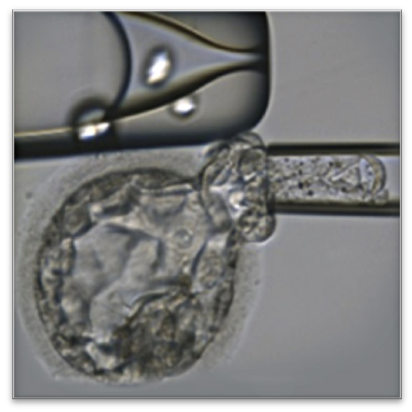
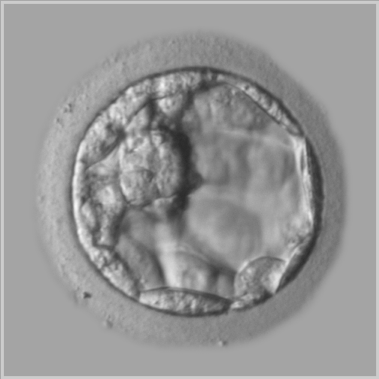
Trophectoderm is the tissue of the blastocyst, which forms on the 5th-6th day of embryo development. At this stage, several cells (usually 5-8) can be taken from the trophectoderm for genetic testing. The larger amount of material collected (compared to the collection of polar bodies or blastomeres) ensures a higher success rate of genetic testing.
The trophectoderm later develops into the placenta during pregnancy, so its biopsy does not interfere with the tissues of the future fetus. For this reason, trophectoderm biopsy is considered the most gentle method of collecting an embryonic sample, and no reduction in embryo viability has been observed in connection with it.
Examination of the trophectoderm biopsy is currently the standard and most commonly performed PGT procedure in our laboratory.
 English
  Czech
Czech  German